
[This op-ed was originally published by the Chicago Tribune. View the original here.]
Amid the current wave of bloodshed in Israel and Gaza, it’s easy to forget that last week saw the deadliest day for Jewish people since the Holocaust. The Hamas-led slaughter of more than 1,400 Israelis on Oct. 7 will likely be added to the long list of tragic dates we’ve marked over the centuries, commemorating one slaughter after another.
Politics briefly aside, Oct. 7 was first and foremost a mass slaughter of Jews. More than 1,400 Jews — including Israelis, Americans, Europeans, Asians and anyone standing in their proximity — have been raped, killed, burnt and disappeared. There was no art or statecraft in this. Only pure brutality.
If you’re not Jewish, it can be difficult to understand how deep this cuts. Almost every single Jew — me included — is born bearing the trauma of past excommunications, pogroms and genocides, which has produced shame, self-loathing and mistrust. My first moral memory was my mom telling me: It doesn’t matter what you believe; they want to kill you anyway.
And then, just last week, we saw hundreds of Jews slaughtered, their deaths live, unfiltered and even celebrated. These horrors trudged up the darkest and most remote memories every Jewish person has locked away in our psychic DNA.
Meanwhile, every single Jewish person is being forced to process our grief for this new historic trauma through the morass of modern political discourse, marked by enmity, opposition and immobility. But because this happened in Israel, many of my well-intentioned and politically “progressive” friends and peers are narrating these same events through their university-honed talking points on the Israeli-Palestinian conflict, despite having absolutely no ethnic, cultural, historic or other ties to the region — as usual.
Let’s say I just saw my sister get killed by a drunken driver. As I hold her dying hand, watching her bleed out, I’m already wan with anger, sadness and grief. And then an anonymous and well-intentioned passerby, noticing the blood and our ashen faces, pats me on the head and says: “Don’t pass judgment; the drunken driver has had a hard life too.”
This might be true as an abstraction, but it’s also an asinine thing to say — and the absolute worst time to say it.
This is what I hear when, in the face of my grief, you say, “Free Palestine,” and accuse Israel of being an apartheid state. Maybe these things are valid, but not as I watch the bodies of my sisters get carted off, raped and murdered, their corpses bandied and desecrated in the streets of Gaza. You’re a kindergartner playing cops and robbers. You have no idea what you’re talking about while you pantomime pistols.
I’m grieving for my slaughtered sisters, brothers, mothers and fathers. Whether this would have happened in Israel or Indiana, my grief would be the same. But because this happened in Israel, at the same time I’m also grieving for the innocent people in Gaza as they shield themselves from Israel’s epic retaliations. I’m disgusted at the fascism of Israeli Prime Minister Benjamin Netanyahu. I’m nauseated by violent state actions in Israel, like the beatings in Jerusalem last year for the funeral of Al-Jazeera reporter Shireen Abu Akleh. And I’m especially angry at how Hamas has been propped up, trained and unleashed.
But more than this, I’m scared for what this slaughter portends for Jewish people around the world — especially as Jews are being cast simultaneously as scapegoats, boogeymen and villains on two active warfronts (Israel and Ukraine) that also sit as keystones in the gateways between democratic values and unbridled fascism.
At the same time, there are only around 15 million Jews alive today, or 0.2% of the global population. We’re a single eyelash on the body of the world. But for millenniums, Jews have been in exactly the spot we’re in now — between a rock and a hard place.
It’s not unusual to see swastikas at Donald Trump and Proud Boy rallies on the right — and it’s increasingly common to see similar symbolism at so-called “Pro-Palestine” rallies on the left. Their rationales are drastically different, but their concluding message to Jews is the same: better that you were dead.
It’s possible at the same time to think “Oct. 7 was the worst day for Jews since Adolf Hitler” and “Innocent Gazans do not deserve to be the victims of war crimes.” I can hold both these thoughts in my head.
But how many rhetorical hoops do Jewish people need to jump through before the “well-intentioned” among you are satisfied with the language of our grief?
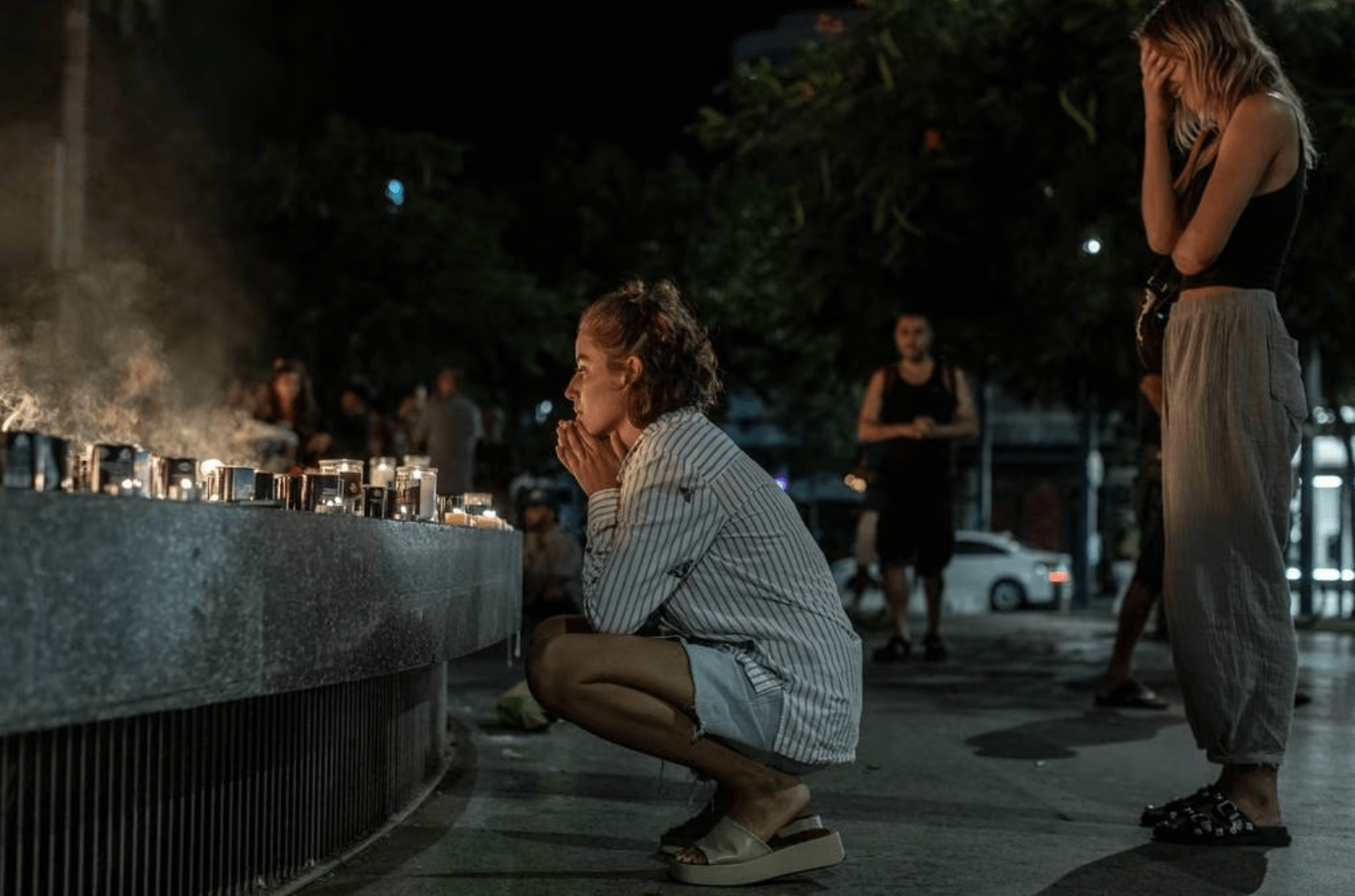
Photo: Brian Cassella / Chicago Tribune / @briancassella (Avishag Shaar-Yashuv/The New York Times)
 ben van loon